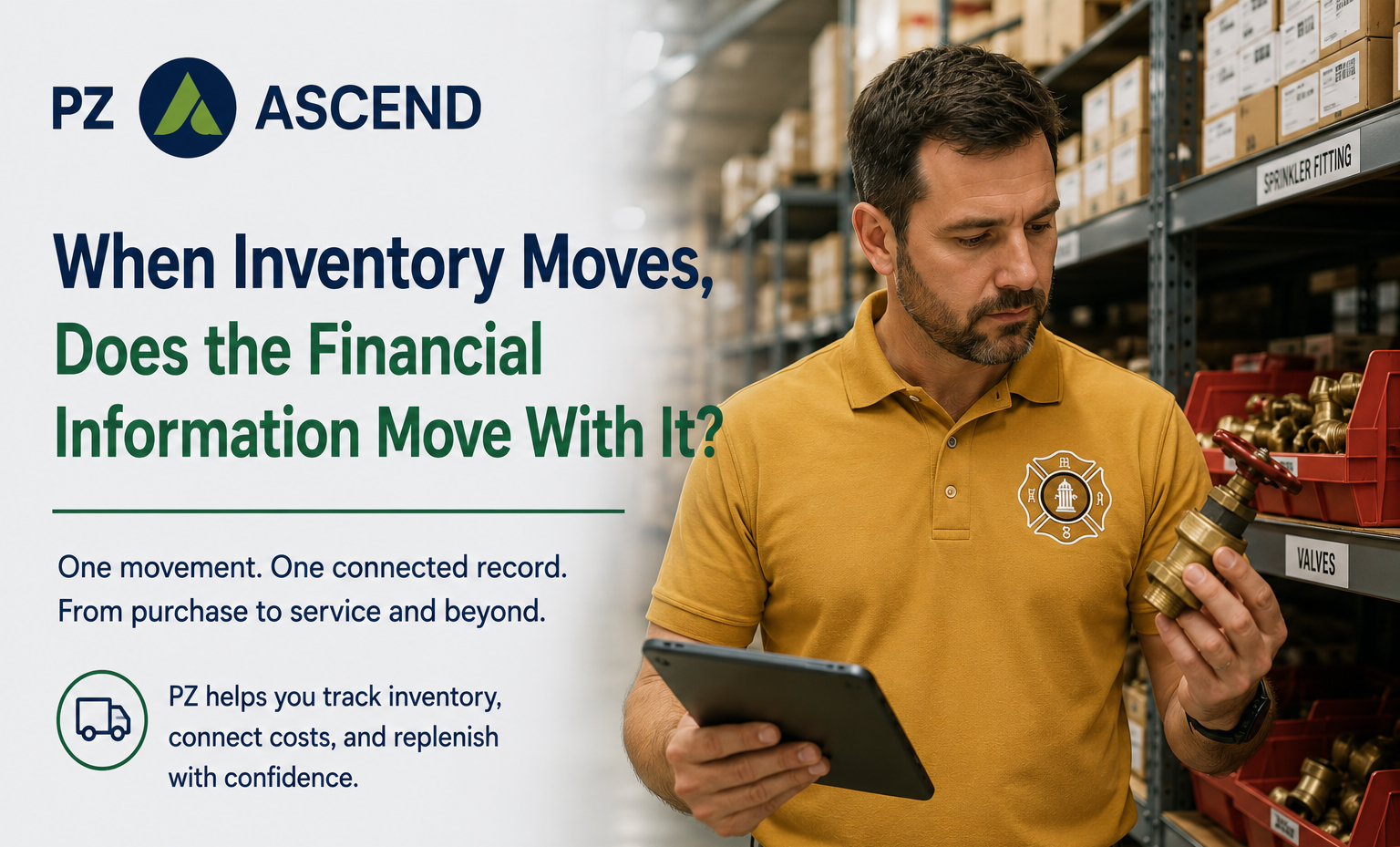
A part moving through a fire protection business rarely affects just one department. It may arrive on a purchase order, sit in a warehouse, move to a technician’s truck, and eventually get used on a service call. Along the way, someone needs to know where that part is, what it cost, which work used it, whether the customer was billed for it, and where that cost belongs financially.
When inventory and accounting are separate, those operational and financial records still have to come together somewhere. PZ was designed so they’re connected from the beginning.
Follow Inventory From Purchase to Service Order
A part purchased for stock can move through several stages in PZ:
- Purchase it for stock. Parts can be ordered for a warehouse or other inventory location.
- Receive it into inventory. When the material is received, PZ updates the quantity on hand, records the cost, and updates the value of the inventory.
- Move it where it’s needed. Inventory can be transferred between locations, including from a warehouse to a technician’s truck.
- Use it on a service order. When a technician uses the stocked part and completes the service ticket, PZ reduces the quantity from the appropriate inventory location, calculates the material cost, assigns that cost to the service order, and creates the related inventory subledger transaction.
Parts don’t always have to take that route. Materials can also be purchased specifically for a service order or installation job rather than purchased for stock. The important part is that PZ knows what the material was purchased for and where its cost belongs.
Connect Inventory Costs to Accounting
The physical movement of a part is only half the story. Inventory represents money the business has already spent. When stock is purchased, that value is held in inventory. As material is used on service work and the work moves through billing, the related cost moves through the appropriate financial accounts. For service work, PZ initially holds material costs in WIP and moves them to COGS when the invoice is committed.
That connection matters when someone wants to understand the profitability of the work. The material used in the field isn’t sitting in an isolated inventory record waiting for someone to reconcile it with accounting later. Its cost is already associated with the work that consumed it.
Use Inventory Replenishment to Restock Warehouses and Trucks
As technicians use stocked material, those quantity changes also give inventory personnel the information they need to replenish it. PZ can maintain reorder points and safety stock quantities for individual items at specific locations. When inventory reaches its reorder point, Location Replenishment can calculate the quantity needed to restore that location to its safety stock level. Customers can also use Truck Replenishment to identify shortages and plan transfers from warehouse inventory back to their trucks.
The material has moved, but PZ hasn’t lost track of what happened. The quantity change can become part of the next replenishment cycle while the cost continues through the financial side of the business.
One Movement, One Connected Record
Inventory touches purchasing, warehouse operations, technicians, service and installation work, billing, costing, and accounting. Each group may care about a different part of the transaction, but they’re all dealing with the same material moving through the same business.
PZ keeps those pieces connected because inventory and financials are part of the same platform. You don’t have to build the financial story somewhere else after the operational work has already happened. When material moves through your business, the information that belongs with it can move with it.
Want to see how PZ connects inventory, operations, and accounting? Contact our team to schedule a demo.